Cold Email in the UK After Brexit: UK GDPR, PECR, and What Changed for B2B
March 15, 2026 · 4 min read · by Ahmet Faruk Yilmaz, Founder of Asphia
TL;DR
UK B2B outreach can involve UK GDPR, PECR, recipient type, and campaign facts. Review the legal basis, recipient classification, transparency, and objection process with qualified UK counsel before launch.
This article is an orientation tool, not legal advice. UK B2B outreach may engage UK GDPR, PECR, recipient classification, and the specific campaign facts. Do not infer that a generic “B2B cold email” label approves a send; ask qualified UK counsel to review the proposed activity.
What Brexit Actually Changed (and What It Did Not)
When the UK left the EU, it did not scrap GDPR. It incorporated the regulation into UK law via the Data Protection Act 2018, creating UK GDPR. The ICO (Information Commissioner’s Office) now enforces this UK version, not the European Data Protection Board.
For cross-border programmes, identify where the controller, processor, recipient, and data flows are located and obtain advice on the rules that apply. A review completed for one market should not be assumed to answer another market’s question.
Brexit did not remove the need for a cross-border review. Keep the jurisdictional analysis current as rules and guidance can change.
The ICO is the UK’s data-protection regulator; relevant EU authorities may also matter for an EU-facing programme. Check current official guidance rather than relying on a static comparison.
The Two Rules You Must Satisfy: UK GDPR and PECR
Cold email in the UK must comply with two separate pieces of law simultaneously.
UK GDPR requires a lawful basis for processing personal data. Legitimate interests can be relevant in some cases, but it is not automatic for B2B cold email. Assess the purpose, necessity, balancing factors, transparency, and individual rights for the actual campaign with qualified UK advice.
Relevance may affect an assessment, but it does not settle it. Document the campaign facts and the approved decision before launch.
PECR (Privacy and Electronic Communications Regulations) adds a layer on top. Its treatment can differ by subscriber type and context. Classify the recipient and use current ICO guidance and counsel before choosing a sending rule.
Make the route to raise an objection or preference clear and test that the operational workflow handles it. The exact requirements depend on the applicable rules and campaign facts.
For a broader treatment of building GDPR-native outbound systems, see our guide on GDPR-compliant cold email agency practices.
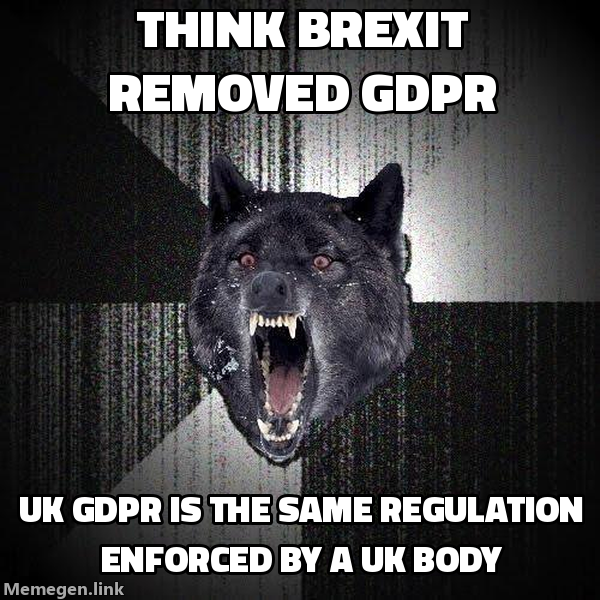 Brexit moved the regulator, not the regulation. UK GDPR and EU GDPR are twins with different passports.
What a Reviewed UK B2B Outreach Process Covers
The following are review prompts, not a substitute for legal approval.
Data sourcing: record provenance and the purpose for using the data. Have counsel assess the source, notice obligations, data minimisation, and whether the proposed processing is permitted.
Targeting: document recipient groups and why the message is proposed. Relevance may matter, but it is not a standalone lawful-basis conclusion.
Content and transparency: have the sender identity, purpose, notices, and objection route reviewed against the campaign’s applicable rules. Test every displayed route before the campaign begins.
Objection management: define how requests are captured, triaged, actioned, and retained. Test every import and sending path so a request is not lost between tools.
Retention: set and document a retention approach that counsel has reviewed. Revisit it when campaign purpose, vendors, or data flows change.
The operational process should be reviewed whenever the campaign, data source, tooling, or market changes.
Common Mistakes UK Senders Make
Assuming Brexit removed the review. It did not. A UK campaign still requires current UK legal and operational analysis.
Treating every business contact as the same. Subscriber classification can matter under PECR. Escalate sole-trader, partnership, and ambiguous cases for review.
No documented decision. If a lawful-basis assessment is proposed, preserve the approved reasoning and ownership; do not retrofit it after a problem appears.
Treating deliverability as a legal control. Sending hygiene and privacy compliance are distinct disciplines. Both need accountable owners and separate evidence.
Use the current ICO direct-marketing guidance as a primary source, alongside qualified advice on the campaign.
How Asphia Approaches UK Compliance
For a UK campaign, the sensible starting point is a documented legal and operational review before launch. The review should cover the proposed data, recipient type, channel, transparency, objection workflow, and accountable owner.
Human approval can support quality control, but it does not replace a lawful-basis or PECR assessment.
If you are running outbound to UK audiences, ask counsel to review the current process before sending. Operational QA can confirm that an approved workflow works; it cannot turn an unreviewed workflow into legal approval.
Request the signal tier list.
A practical view of how we rank observable signals before outreach. We review each request for fit and may reply by email; delivery is not automatic.
By submitting, you agree to processing described in our Privacy Policy.
Your request was submitted. If it is a fit, we may follow up by email.
One more step: send the prepared request to faruk@asphia.consulting
FAQ
Is cold email legal in the UK after Brexit?
Whether a proposed campaign is permitted depends on the recipient type, message, channel, and facts. UK GDPR and PECR can both apply. Obtain qualified UK legal advice before sending rather than treating a generic B2B rule as approval.
What is the difference between UK GDPR and EU GDPR for cold email?
They are distinct regimes with different regulators and evolving rules. Cross-border programmes need a documented review of which rules apply to each processing activity and recipient group; do not assume the same assessment works unchanged in both places.
Does PECR apply to business email addresses in the UK?
PECR treatment can differ by subscriber type, including corporate subscribers, sole traders, and some partnerships. Use current ICO guidance and UK counsel to classify the recipient and assess both PECR and UK GDPR for the proposed campaign.
What does legitimate interest mean for B2B cold email under UK GDPR?
Legitimate interests can be a lawful basis in some circumstances, but it is not automatic for B2B outreach. Assess the purpose, necessity, balancing factors, transparency, objections, and applicable PECR rules with qualified advice.
Do I need a data transfer agreement to send cold email from the EU to UK contacts after Brexit?
International-transfer requirements are time-sensitive and fact-specific. Check current European Commission, ICO, and qualified legal guidance before relying on a transfer mechanism or adequacy decision.
What happens if I ignore UK GDPR when cold emailing UK businesses?
The ICO enforces UK data-protection and electronic-marketing rules. Enforcement exposure depends on the circumstances; use current ICO materials and qualified counsel rather than relying on a generic penalty summary.

Ahmet Faruk Yilmaz
Founder of Asphia. He builds and runs signal-based B2B outbound engines for lean teams, and writes about cold email, Clay, deliverability, and GTM engineering.
Want this run for you?
Explore our B2B outbound and GTM engineering services, then request the planning framework to scope your next campaign.
Request the planning framework →