B2B Cold Email Reply Rates by Industry
May 24, 2026 · 4 min read · by Ahmet Faruk Yilmaz, Founder of Asphia
TL;DR
Cold email reply rates depend on the industry, sequence structure, and how closely the message matches the recipient's current situation. SaaS, recruiting, and professional services tend to perform better when outbound is triggered by a relevant signal and personalized before sending.
Cold email reply rates depend on the industry, the quality of the targeting, and the timing. A modest rate in enterprise software may be poor in recruiting because the sales cycles, buying committees, and urgency are different.
Here is how those differences show up across the main B2B verticals.
Industry Benchmarks Worth Knowing
These observations apply to signal-triggered outbound in industries where cold email is a primary acquisition channel.
Recruiting and staffing: This is one of the strongest verticals for cold email. Candidates and talent pipelines address a problem hiring managers deal with every day. Subject lines that mention an open role or recent team expansion tend to lift opens.
IT services and managed services: Outreach works better near a trigger such as a new CTO, a tech stack change, or an expansion round. It falls flat when it reads like a capabilities brochure. For a deeper look, see cold email for IT services companies.
SaaS companies doing outbound: Results vary widely. Point solutions aimed at a specific role, such as RevOps managers or finance leads, outperform horizontal platforms. Strong SaaS campaigns refer to a workflow the prospect is visibly struggling with instead of listing product features. See lead generation for B2B SaaS for the full playbook.
Consulting and professional services: Trust takes longer to build, so meeting rates matter more than raw reply rates. A modest reply rate that produces discovery calls beats a higher rate that goes nowhere. See outbound for professional services.
Fintech and financial services: Regulation and cautious buyers raise the bar for personalization. Campaigns that open with a specific regulatory context, such as a new compliance requirement or market shift, outperform those that lead with the product.
Agencies pitching agencies: This is a difficult list because the inbox is already full of agency pitches. Social proof from a relevant market and a short, direct ask, such as a 15-minute call, outperform a long pitch. See cold email for agencies for a framework.
What Actually Moves Reply Rates
 Industry sets the floor. Execution sets the ceiling.
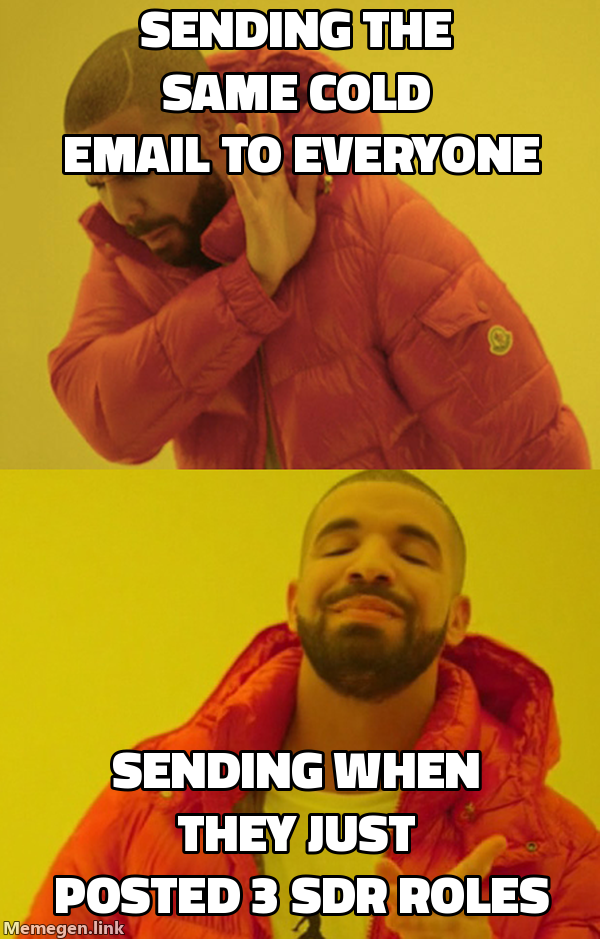
Signal timing has the largest effect. An email sent within days of a funding announcement, a new VP of Sales hire, or a relevant job posting gets a different reception from the same email sent with no context. Clay and Apollo can filter lists by these signals before the copy is written. Our Clay enrichment service page explains the approach.
Copy length and specificity matter more than the template. Emails under 100 words with one specific observation about the recipient’s situation outperform longer messages packed with features and benefits. “I noticed you’re hiring SDRs in Amsterdam” is stronger than “We help companies build pipeline.”
Deliverability comes first. A strong reply rate means nothing if many of your emails land in spam. Warm domains properly, keep bounce rates low, and use a dedicated sending domain for each campaign. These are baseline requirements. Our AI cold email that avoids spam guide covers the technical setup.
Subject lines need separate attention. Open rates affect every metric that follows. Short, lowercase subject lines with no punctuation often outperform obvious marketing copy. Five words or fewer is not a rule, but it is a useful constraint.
The Human Approval Problem Most Agencies Skip
AI-generated copy can look personalized while getting the facts wrong. It may cite a real signal, such as a recent hire or product launch, but hallucinate or misread the detail. Recipients notice. Replies drop and the sender’s reputation takes a hit.
Put a human approval gate before every send. At Asphia, each email goes through an independent fact audit and human review before it leaves the queue. That extra step catches messages that could damage the relationship before it starts. Done-for-you cold email explains the full workflow.
What to Benchmark Against
Track your own sequence over time instead of fixating on industry averages:
- An open rate well above the industry norm suggests that your subject lines and deliverability are healthy.
- A reply rate above your baseline suggests that your ICP and copy are aligned.
- A rising positive reply rate, excluding responses such as “remove me,” suggests that the offer is relevant.
If one of these metrics is below target, inspect the layer above it: the signals, the list, the copy, or the call to action. If you are starting from scratch, how to book meetings without an SDR explains the sequencing logic.
Use the industry as context, then judge performance against your own baseline.
Get the signal tier list in your inbox.
We rank signals from S to D to decide who gets a cold email and who does not. You get the list once. No follow-up emails.
Request received. The list lands in your inbox within 24 hours.
One more step: send the prepared request to faruk@asphia.consulting
FAQ
What is a good reply rate for B2B cold email?
A good reply rate beats your own industry baseline. Very low rates usually point to poor deliverability, a mismatched ICP, or copy that could have been sent to anyone.
Which industry gets the highest cold email reply rates?
Recruiting and staffing firms often see some of the highest rates because their offers are directly relevant to hiring managers under pressure. IT services and SaaS companies targeting mid-market buyers also perform well when they time outreach around signals such as funding rounds or team growth.
Does personalization actually improve cold email reply rates?
Yes. Using only a first name and company name rarely beats a generic blast. Referencing a specific trigger, such as a recent hire, job posting, or product launch, gives the recipient a clear reason for the message.
How many follow-ups should I send in a cold email sequence?
Three to five touches over two to three weeks is a common structure. Most replies come after the first email, often on follow-ups two or three. Beyond five touches, the small gain in replies rarely justifies the unsubscribe risk.
Why do my cold email reply rates drop over time?
The usual causes are list fatigue, declining deliverability from too many bounces, and stale copy. Rotating sending domains, cleaning lists before each campaign, and refreshing copy every six to eight weeks can keep performance stable.
How does GDPR affect cold email reply rates in Europe?
GDPR-compliant cold email does not prevent outbound. It requires a clean data source, a genuine business reason for contact, a professional context, and an opt-out in every email. Well-targeted campaigns in Germany, the Netherlands, and the UK can perform comparably to US benchmarks when ICP fit is tight.

Ahmet Faruk Yilmaz
Founder of Asphia. He builds and runs signal-based B2B outbound engines for lean teams, and has booked meetings with teams at companies across five markets. Writes about cold email, Clay, deliverability, and GTM engineering.
Want this run for you?
Get a free GTM analysis. We show you the exact engine we would build.
Get your free GTM analysis →